Developing a new plastic product requires more than confirming that a design looks correct on a screen. Before committing to production tooling, product development teams often need physical parts that represent the intended molded component in material, geometry, function, and manufacturing behavior. This is where prototype molding services become valuable.
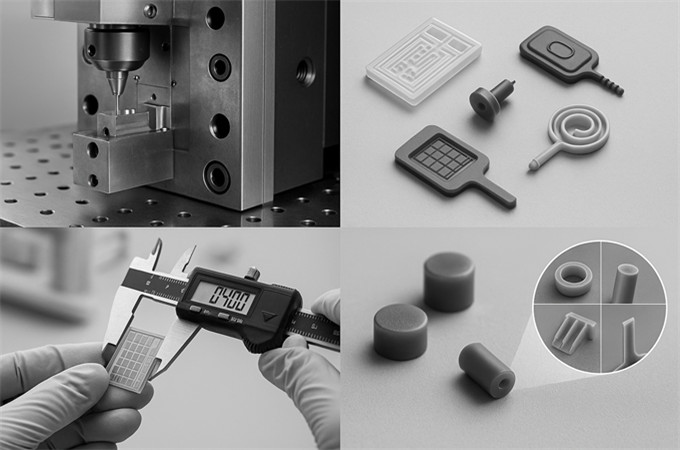
Prototype molding uses injection molding processes and prototype tooling to produce functional plastic parts before full-scale production. Compared with 3D printing or machining, it can provide a more representative way to evaluate molded components when material behavior, assembly, dimensional performance, and manufacturability matter.
For medical device, diagnostic, and life science applications, prototype molding can also support design verification, functional evaluation, and regulatory testing. TPI provides high-precision injection molded prototypes using aluminum and steel tooling, with prototype services available in as fast as five days depending on project requirements.
Prototype molding services involve producing injection-molded prototype parts before a product moves into full-scale production. The objective is not simply to create a physical sample, but to provide a realistic part for evaluating the design, material, function, and manufacturing approach.
A molded prototype can help product teams evaluate:
This makes prototype injection molding particularly useful once a design has progressed beyond early concept validation. A CAD model may confirm geometry, while a 3D-printed prototype can confirm basic fit or ergonomics. However, neither necessarily reproduces the behavior of an injection-molded thermoplastic component.
Prototype molding can therefore provide an intermediate stage between concept development and production. It allows teams to identify design or manufacturing risks before investing heavily in production tooling.
The objective is ultimately to obtain useful manufacturing evidence, rather than simply produce a small quantity of plastic parts.
The primary reason to use prototype injection molding is to evaluate a design using parts that more closely represent the intended production component.
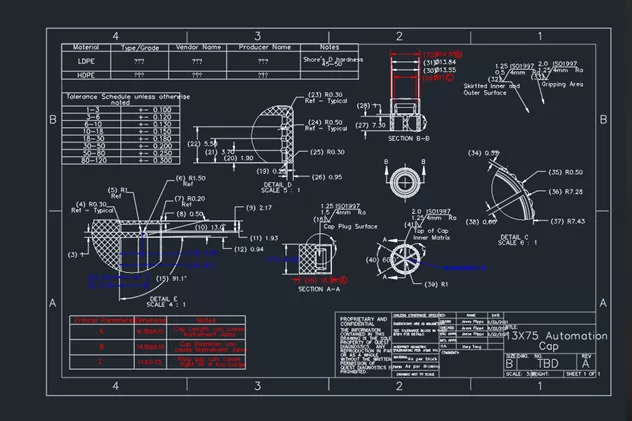
Injection molded prototypes can be used to check dimensional relationships, component interfaces, ergonomics, assembly, and functional performance.
For example, an enclosure may appear correct in CAD but reveal interference during assembly. A connector may meet nominal dimensions but fail during repeated insertion. A medical component may require functional testing that cannot be meaningfully performed using a prototype made from a different material or manufacturing process.
Material selection can significantly affect the behavior of a molded component. Strength, stiffness, flexibility, chemical resistance, thermal performance, and other properties can influence whether a design is suitable for its intended application.
Using the intended or representative molding material allows development teams to evaluate performance under conditions closer to those expected in production.
Prototype molding can reveal issues related to:
Identifying these issues before production tooling is finalized can reduce the risk of expensive modifications later.
For medical applications, the prototype may also have to support more formal development activities. TPI states that its prototyping services support design verification and functional parts for regulatory testing, with experience involving more than 300 custom medical components annually.
Prototype molding is not automatically the best option at every development stage. The right method depends on what the development team needs to learn from the prototype.
| Prototyping Method | Best For | Main Limitation |
| 3D Printing | Early geometry, appearance, and concept validation | May not reproduce injection-molded material or process behavior |
| CNC Machining | Precise functional prototypes and selected low-volume parts | Does not reproduce injection molding characteristics |
| Prototype Molding | Production-representative molded plastic parts | Requires prototype tooling |
3D printing is often effective when the design is still changing frequently. It can help engineers evaluate dimensions, proportions, ergonomics, and basic assembly without investing in tooling.
However, printed parts may differ from molded components in material properties, surface characteristics, anisotropy, and manufacturing behavior.
CNC machining can provide precise prototypes without injection tooling and may be appropriate when only a few parts are needed.
The limitation is that machining does not reproduce molding-specific factors such as gate location, parting lines, ejection, flow behavior, and molding-related shrinkage.
Prototype molding becomes more valuable when teams need molded parts made from representative thermoplastics and want to evaluate:
A practical development path may therefore move from 3D printing to CNC or other early prototype methods, then to prototype molding and finally production tooling. The exact sequence depends on the maturity and requirements of the product.
A successful prototype molding project begins before the mold is fabricated. Engineering decisions made during design review can influence tooling requirements, prototype quality, development time, and eventual production performance.
The first stage typically involves reviewing CAD geometry and product requirements. Design for Manufacturability (DFM) helps identify features that could create molding difficulties or unnecessary tooling complexity.
Important considerations can include wall thickness, draft angles, ribs, bosses, gates, parting lines, ejection, tolerances, and expected material shrinkage.
TPI provides collaborative CAD reviews, DFM, Moldflow analysis, and material optimization. Its mold design capabilities also include flow, gate, and cooling simulations intended to reduce manufacturing risk and unnecessary rework.
Once the design is reviewed, the appropriate tooling strategy can be determined. Prototype molds may use aluminum or steel depending on the project.
The choice should consider:
Prototype tooling should not be selected independently from the product's long-term manufacturing strategy. If the design is expected to move quickly into production, the tooling approach should account for that transition.
After the mold is fabricated, the first molded parts are commonly referred to as T1 samples or first-shot samples. These parts provide an opportunity to evaluate dimensions, appearance, fit, function, and molding performance.
The T1 stage can reveal issues that lead to: Tooling → T1 Samples → Inspection → Design or Mold Adjustment → Repeat Sampling. This iterative process allows engineering teams to address problems before the project moves into production.
Prototype parts can then be evaluated against project requirements. Depending on the application, testing may include dimensional inspection, functional testing, assembly evaluation, material assessment, or other application-specific studies.
For regulated products, the prototype may become part of a broader design verification and validation strategy.
Tooling and material decisions should be considered together because the selected resin, geometry, expected quantity, and future production requirements all affect the appropriate prototype strategy.
Aluminum tooling can be suitable for prototype and limited-volume applications where rapid development is important. Steel tooling may be considered when greater durability or closer alignment with future production requirements is needed.
The choice should be based on project requirements rather than assuming that one tooling material is universally better.
| Factor | Prototype Tooling | Production Tooling |
| Primary purpose | Design and functional validation | Repeat production |
| Investment | Generally lower | Generally higher |
| Design maturity | Suitable during development | Intended for finalized design |
| Expected use | Limited or development-stage quantities | Extended production |
| Flexibility | More suitable for iterations | Optimized for production |
TPI's prototyping service supports both aluminum and steel tooling, while its broader mold capabilities include mold design, manufacturing, validation, repair, and lifecycle maintenance.
Material selection should reflect the intended application rather than simply the appearance of the prototype. Engineers may need to evaluate:
For medical products, material selection can be especially important because prototype parts may be used for meaningful functional or regulatory evaluation. TPI provides material-selection guidance related to factors such as strength, biocompatibility, and sterilization requirements.
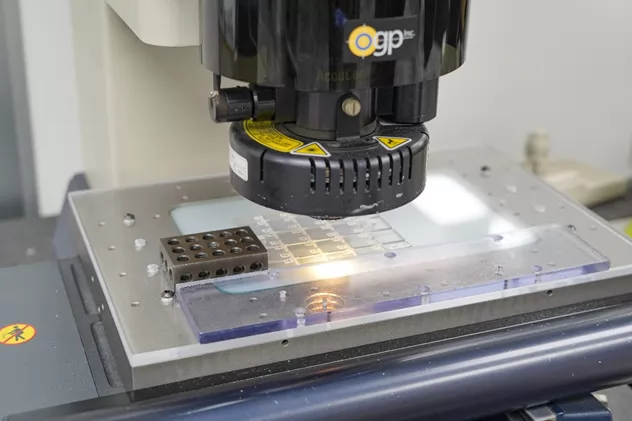
Medical and diagnostic products can place additional demands on prototype molding services because the prototype may need to support more than visual or dimensional evaluation.
A medical prototype may need to demonstrate:
For these projects, the key question is not simply whether a supplier can mold a prototype. It is whether the prototype can provide useful evidence for the next stage of product development.
TPI is a U.S.-based contract manufacturer specializing in custom plastic injection molding for medical device, life science, and diagnostic industries. The company reports more than 35 years of experience and serves a global customer base that includes eight of the world's top 30 medical device companies.
TPI also reports experience with more than 300 custom medical components annually, providing a strong connection between prototype development and medical manufacturing.
Prototype molding can provide parts for design verification, functional evaluation, and regulatory testing when the prototype needs to represent the intended molded product.
This makes engineering support particularly important. A prototype supplier should understand not only how to produce the part, but also how tooling, material selection, process control, and dimensional performance can affect subsequent development activities.
For medical and diagnostic applications, quality systems and manufacturing conditions should be considered early.
TPI states that it is ISO 13485 certified and operates ISO Class 8 cleanroom areas. These capabilities support applications where controlled manufacturing conditions and documented quality processes are important.
A prototype should ideally contribute to the next stage of manufacturing rather than become a dead-end development activity.
A typical development path can be: Prototype Development → Mold Design & Tooling → Validation → Full-Scale Production. TPI explicitly describes this type of workflow, including prototype development, mold design and tooling, IQ/OQ/PQ validation, and full-scale production.
Prototype parts can help confirm that the design meets functional and dimensional requirements before a full production commitment is made.
For regulated products, validation becomes an important part of transitioning from development to repeatable manufacturing. TPI identifies IQ/OQ/PQ validation as part of its manufacturing workflow.
A supplier capable of supporting production after prototyping can reduce the need to transfer tooling knowledge, material decisions, process experience, and quality requirements to another manufacturer.
TPI's capabilities extend beyond molding to services including assembly, packaging, kitting, and related manufacturing support.
The objective is therefore not simply to produce a successful prototype. A strong prototype molding program should help establish a practical path toward scalable production.
When comparing prototype molding services, price and turnaround time are important, but they should not be the only criteria.
To obtain a useful quotation, buyers should generally provide:
Providing this information early allows the supplier to evaluate tooling, material, process, inspection, and timing requirements more accurately.
Trademark Plastics, Inc. (TPI) combines prototype molding with engineering, tooling, validation, and production capabilities for demanding plastic components.
Its prototyping service provides high-precision injection molded prototypes using aluminum and steel tooling, with prototype services available in as fast as five days depending on project requirements. TPI also reports experience with more than 300 custom medical components annually.
TPI provides engineering support including DFM reviews, Moldflow analysis, material optimization, and scientific molding expertise. Its manufacturing capabilities also include 51 injection molding machines ranging from 6 to 610 tons.
For medical and diagnostic projects, TPI combines prototype development with ISO 13485-certified manufacturing and ISO Class 8 cleanroom capabilities. Its broader workflow includes tooling, validation, full-scale injection molding, assembly, packaging, and other value-added services.
These capabilities allow product development teams to evaluate molded prototypes while maintaining a potential path toward validated and repeatable production.
Q1: When should you use prototype molding instead of 3D printing?
Prototype molding becomes more appropriate when teams need production-representative plastic materials, realistic molded-part performance, functional assembly testing, or injection-specific design validation. 3D printing can remain more practical for early-stage geometry and concept evaluation.
Q2: How long does prototype molding take?
The timeline depends on part geometry, tooling requirements, material, quantity, and project scope. TPI states that its high-precision injection molded prototypes can be produced in as fast as five days, depending on project requirements.
Q3: How much does prototype molding cost?
Costs vary according to tooling, part complexity, material, quantity, mold design, and inspection or validation requirements. An accurate quotation normally requires review of the product design and project specifications.
Q4: What materials are used for prototype injection molding?
Prototype injection molding can use different thermoplastic materials depending on mechanical, thermal, chemical, dimensional, and application requirements. Medical projects may also require consideration of biocompatibility, sterilization, and intended use.
Q5: Can prototype molding be used for medical devices?
Yes. Prototype molding can support medical device development when teams need representative molded parts for fit, function, design verification, or regulatory testing. TPI specifically supports medical, diagnostic, and life science applications and operates under an ISO 13485-certified quality system.
The Complete Guide to Custom Medical Components
Discover critical insights into material selection, DFM principles, ISO Class 8 cleanroom standards, and IQ/OQ/PQ validation required for scaling medical plastic components from concept to mass production.
Complete Guide to Medical Micro Molding for High-Precision Devices
Learn how high-precision micro molding achieves micron-level tolerances for complex medical components, microfluidic platforms, and miniaturized diagnostic devices.
Medical Micro Molding Services & Capabilities
Explore TPI’s specialized micro-injection molding capabilities, state-of-the-art machinery, tooling precision, and cleanroom production environments tailored for life-critical applications.
Prototype molding services provide product development teams with a practical way to evaluate production-representative plastic components before committing to full-scale production tooling. The approach is particularly valuable when material behavior, functional performance, manufacturability, and assembly need to be evaluated using molded parts.
For medical, diagnostic, and life science products, supplier selection should go beyond tooling price and prototype speed. Engineering support, quality systems, validation capabilities, controlled manufacturing environments, and prototype-to-production continuity can all affect development risk.
Trademark Plastics Inc combines prototype molding, DFM, tooling, validation, precision injection molding, and production capabilities, providing a manufacturing path for organizations developing precision plastic components for demanding applications.
Ready to discuss your prototype molding project?
Contact our engineering team today for a consultation and quote.
Get a Quote