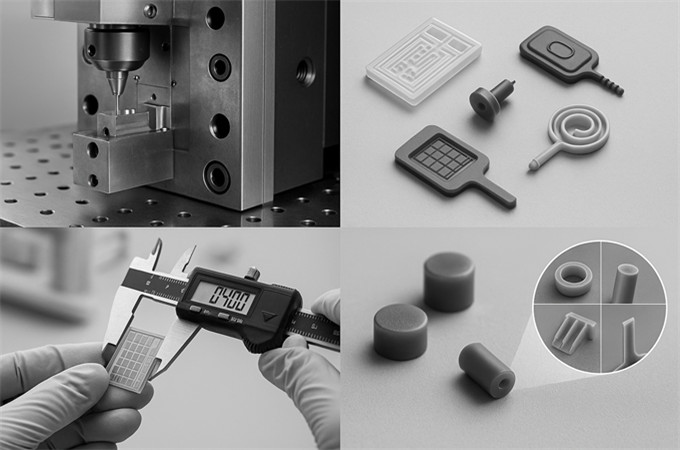
Medical device engineering and technical procurement operate in an environment where tolerances are measured in microns and process variability can jeopardize patient safety or regulatory approval. Developing custom medical components—from intricate in-vitro diagnostic (IVD) microfluidic cartridges to critical surgical tool assemblies—requires a specialized manufacturing approach that standard commercial injection molders simply cannot provide.
Navigating material selection, Design for Manufacturability (DFM), environmental contamination controls, and stringent FDA process validation is a complex journey. This comprehensive guide outlines the critical steps required to take custom medical plastic components from CAD concept to full-scale, compliant production.
Regulatory Rigor: ISO 13485 certification, FDA 21 CFR Part 820 compliance, and certified ISO Class 8 cleanrooms are non-negotiable baselines for commercializing medical-grade components.
Engineering Excellence: Early Supplier Involvement (ESI), coupled with advanced Moldflow simulation and DFM analysis, mitigates high-cost tooling revisions late in the development cycle.
Process Repeatability: Scientific injection molding and rigorous IQ/OQ/PQ mold validation ensure long-term lot-to-lot consistency and sub-thousandth-inch precision (±0.0005'').
Strategic Advantage: Partnering with domestic medtech contract manufacturers like Trademark Plastics, Inc. (TPI) streamlines supply chain logistics and accelerates time-to-market.
Unlike commodity plastic products, custom medical components are engineered to execute highly specific functions under rigorous biological, mechanical, and environmental constraints. They serve as the structural and operational backbones for advanced healthcare systems.
Industry Insight: Leveraging over three decades of specialized injection molding expertise in Riverside, CA, Trademark Plastics, Inc. (TPI) partners with OEM teams to translate complex medical device concepts into robust, scalable production realities.
Choosing the right polymer matrix is critical. Medical-grade resins must balance mechanical strength, thermal stability, chemical resistance, and strict biological safety requirements.
| Material Category | Primary Resin Examples | Key Attributes | Typical Medical Applications |
| High-Performance Polymers | PEEK, PPSU | Exceptional thermal stability, repeated steam sterilization (autoclave) resistance, high tensile strength | Reusable surgical instruments, orthopedic trial components, structural implants |
| Optical Amorphous Polymers | Polycarbonate (PC), PMMA (Acrylic) | Crystal clarity, impact resistance, dimensional stability | Fluid inspection windows, IVD diagnostic cartridges, dialyzer housings |
| Cyclic Olefin Copolymers | COC, COP | Superior UV/optical clarity, extremely low water absorption, high chemical resistance | Microfluidic chips, reagent containers, pre-fillable syringes |
| Commodity Engineering Resins | Medical-Grade PP, HDPE | Chemical inertness, low cost, excellent fatigue resistance for living hinges | Disposable labware, vial caps, sample cups, fluid connectors |
| Elastomers & Overmolding | TPE, TPU | Soft-touch comfort, seal integrity, vibration dampening | Surgical tool handles, seal gaskets, wearable device enclosures |
All custom medical component materials must undergo biocompatibility evaluation under ISO 10993 and USP Class VI standards to ensure no cytotoxic, systemic toxic, or pyrogenic reactions occur upon contact with human tissue or fluids.
Design for Manufacturability (DFM) bridges theoretical mechanical engineering and physical production realities. Applying rigorous DFM principles early reduces tooling rework, shortens validation timelines, and optimizes unit costs.
Engineering Expertise: TPI integrates Early Supplier Involvement (ESI) and advanced Moldflow simulation software before tool production. This proactive approach identifies potential flow hesitation, air traps, and warpage prior to cutting steel, ensuring a smooth path to tooling sign-off.
Environmental control is critical when producing components intended for surgical insertion, fluid transport, or cellular assay analysis. Airborne particulates, human shedding, and organic contaminants can compromise device performance or cause bioburden validation failures.
Unlike standard industrial molding spaces, an ISO Class 8 Cleanroom environment maintains strict control over airborne particulate counts (maximum 3,520,000 particles/m³ for particles ≥ 0.5μm), temperature, humidity, and airflow patterns.
Facility Spotlight: Trademark Plastics, Inc. operates certified ISO Class 8 Cleanroom injection molding suites and controlled white-room manufacturing environments at its Riverside, California facility, giving medical OEMs peace of mind for particulate-sensitive projects.
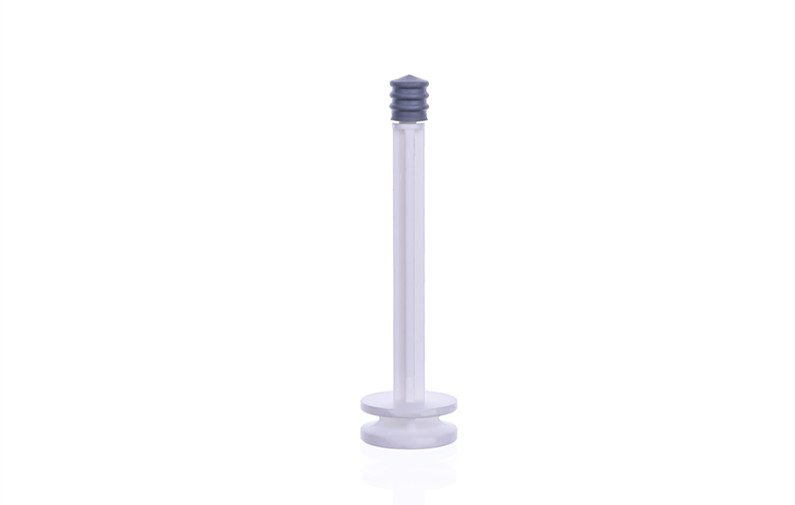
In medical device manufacturing, process repeatability is as vital as part design. The FDA's 21 CFR Part 820 and ISO 13485:2016 quality management standards require rigorous validation demonstrating that an injection molding process consistently produces parts meeting every technical drawing specification over time.
Installation Qualification (IQ): Confirms that the molding equipment, mold tool, auxiliary chillers, dryers, and cleanroom hookups are installed correctly to vendor and engineering specifications.
Operational Qualification (OQ): Uses Scientific Molding protocols and Design of Experiments (DOE) to establish the robust processing window. Key variables—including fill speed, melt temperature, hold pressure, and pack time—are varied to find the upper and lower operating boundaries.
Performance Qualification (PQ):Demonstrates that the molding process produces compliant components consistently under standard operating conditions across multiple consecutive production runs (typically 3 separate production lots) with process capability indices (Cₚₖ ≥ 1.33 or Cₚₖ ≥ 1.67 for critical dimensions).
A complete quality assurance loop relies on modern metrology tools like coordinate measuring machines (CMM) and non-contact optical inspection systems. Furthermore, complete material certification (Certificate of Analysis) and full resin lot traceability ensure end-to-end accountability for every medical component shipped.
When evaluating potential contract manufacturing partners for custom medical component projects, procurement managers and QA directors can use this vendor evaluation checklist to gauge technical capability:
For decades, Trademark Plastics, Inc. (TPI) has served as a trusted partner to tier-one medical device OEMs, supply chain managers, and R&D engineering teams. Operating from a modern 100,000 sq. ft. facility in Riverside, CA, TPI offers fully integrated capabilities designed specifically for high-precision medical manufacturing.
Q1: What key certifications should a custom medical component injection molder hold?
An injection molding partner for medical devices should hold an active ISO 13485:2016 certification and operate in alignment with FDA 21 CFR Part 820 guidelines. For sterile or particulate-sensitive components, certified ISO Class 8 cleanrooms are also required.
Q2: What is the core difference between IQ, OQ, and PQ during mold validation?
IQ (Installation Qualification): Verifies that equipment, tooling, and utilities are properly installed to engineering specs.
OQ (Operational Qualification): Identifies the stable operating parameters and process window using Scientific Molding DOEs.
PQ (Performance Qualification): Confirms through consecutive production runs (typically 3 distinct lots) that the process consistently produces compliant parts meeting Cₚₖ standards over time.
Q3: When is the ideal time to involve a medical molder like TPI in the product design cycle?
Engaging a contract manufacturer during the early conceptual CAD phase (Early Supplier Involvement / ESI) is ideal. Early DFM analysis allows engineers to optimize wall thickness, draft angles, gate locations, and material selections before cutting steel—saving significant tooling costs and engineering time.
Q4: Can Trademark Plastics support micro-molding tolerances for high-precision diagnostic components?
Yes. Trademark Plastics, Inc. produces high-precision components with tolerances down to $pm 0.0005$ inches, making TPI an ideal partner for microfluidic chips, optical diagnostic cartridges, and complex surgical tool parts.
Navigating the journey from initial CAD design to high-volume, compliant production of custom medical components demands more than just standard plastic injection molding. It requires a manufacturing partner with deep polymer engineering expertise, certified ISO Class 8 cleanroom environments, and complete IQ/OQ/PQ process validation protocols.
By prioritizing early supplier involvement (ESI), rigorous DFM principles, and scientific injection molding methodologies, medical device OEMs can effectively eliminate costly tooling revisions, minimize bioburden risks, and significantly shorten their time-to-market.
As a domestic, ISO 13485-certified contract manufacturer based in Riverside, CA, Trademark Plastics, Inc. (TPI) provides the technical precision, cleanroom capacity, and regulatory compliance needed to bring complex medical devices to life with zero-defect quality.
Ready to Validate Your Next Custom Medical Component Program?
Partner with an engineering-led molder that understands the high-stakes demands of the medical technology industry.
Request an Engineering DFM Review: Have our team analyze your part geometry, gate placement, and material selection before cutting steel.
Explore Our Capabilities: Visit the Trademark Plastics Medical Molding Page to tour our ISO Class 8 cleanrooms and discuss your custom medical molding needs with a technical expert today.
Ready to discuss your medical micro molding project?
Contact our engineering team today for a consultation.
Get a Quote