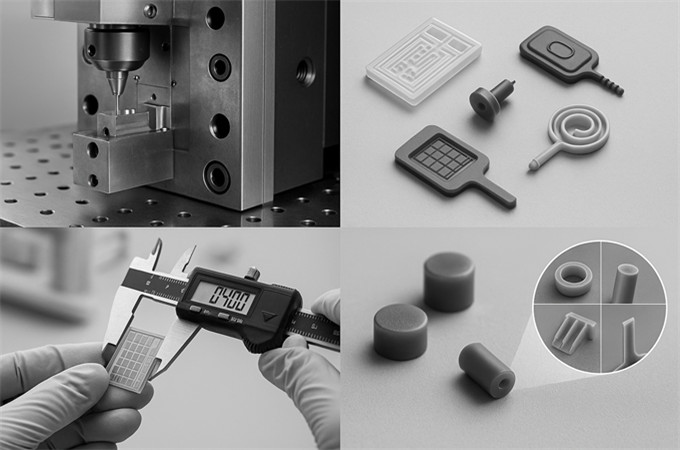
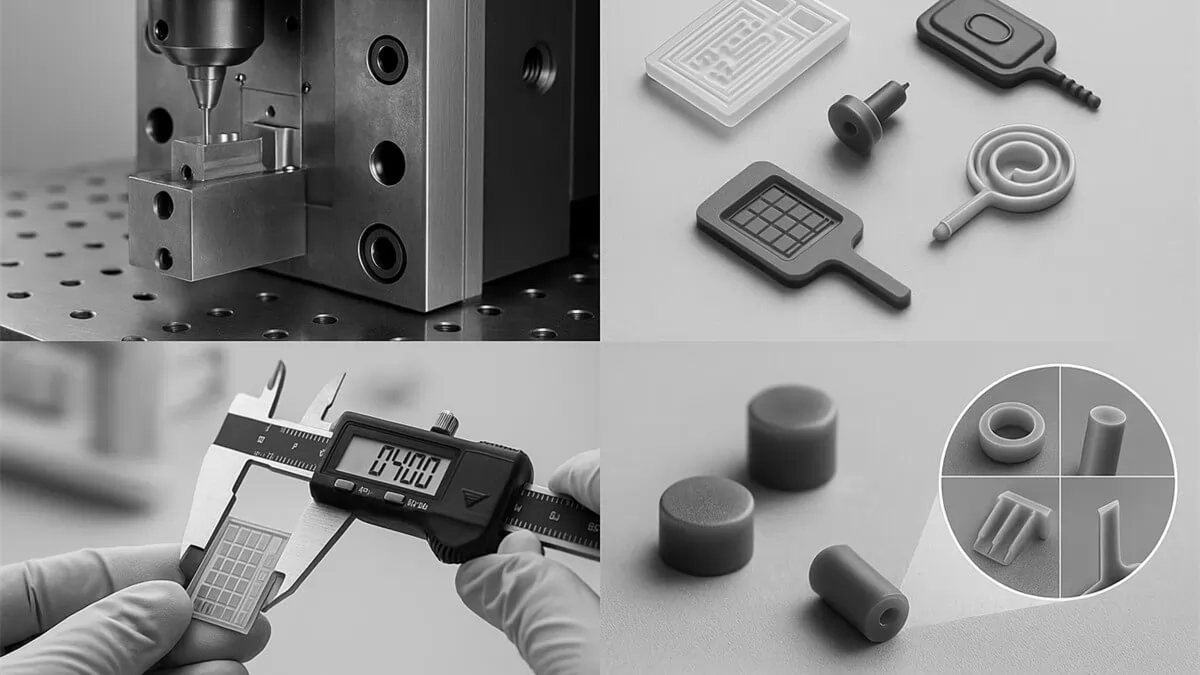
• Specialized micro-capable presses and precise shot-size control.
• Extremely fine cavities and gates machined by EDM or micro-milling.
• Tight mold temperature control and advanced cooling strategies.
• In-line metrology and scientific molding practices for repeatability.
• Extreme precision and repeatability. Medical micro molding routinely supports the tight tolerances required by IVD cartridges, microfluidic chips, micro-connectors, and optical components.
• Small, dense geometries. Micro gears, channels, valves, and acoustic paths are possible in high volumes without multi-piece assembly.
• Biocompatible material options. Medical-grade thermoplastics and specialty resins compatible with sterilization and low-extractables requirements are available for micro molding.
• Compact tooling and faster iterations. Smaller molds can shorten tooling lead times and reduce cost for early development and low-to-medium production volumes.
• Validated, regulated processes. Micro molding providers operating under ISO 13485 and offering IQ/OQ/PQ documentation simplify regulatory submission and manufacturing transfer.
| Characteristic | Typical Range / Example |
| Dimensional tolerances | Sub-0.01 mm (≤ 10 µm) common; specific features achievable to ~0.0127 mm (0.0005") or better in validated medical micro molding setups |
| Minimum feature size | Features and wall sections < 0.5 mm commonly produced; channels and radii in the single-digit micron range possible for select designs |
| Shot weight | Fractions of a gram to a few grams — precise shot control required |
| Process controls | Scientific molding, cavity pressure/temperature monitoring, in-line metrology, and traceable lot control |
| Tooling technology | EDM, wire-EDM, micro-milling, and diamond-finish EDM for optical surfaces |
• Polycarbonate (PC) and PC blends — good optical properties and dimensional stability for lenses and rigid medical micro molded components.
• PEEK and PPSU — for high-temperature, autoclave-sterilizable micro molded components.
• Medical-grade polyurethanes and elastomers — for flexible micro-features, seals, and over-molded elements in wearable and implantable devices.
• Specialty low-extractable resins — critical for reagent-contacting IVD micro molded parts and Class II/III device applications.
1. Simplify critical dimensions. Minimize the number of micron-critical features. When possible, design features to be tolerant of small dimensional shifts.
2. Uniform wall thickness. Aim for consistent wall sections; very thin, abrupt transitions cause filling issues and local stress. Use ribs very sparingly — micro ribs often cause flow irregularities.
3. Gate and vent design. Use tuned gate locations and appropriately sized vents to prevent air traps. Micro vents or flow channels in the mold are often necessary in medical micro molding tooling.
4. Draft and parting lines. Maintain realistic draft angles — even micro molded medical parts need draft to release cleanly. Consider micro-texture feasibility and its effect on functional surfaces.
5. Tolerance stack planning. Build realistic tolerance stacks and involve your micro molder early. Simulation at micro scale is useful but not definitive; plan for rapid mold trials and prototype iterations.
6. Feature orientation. Wherever possible, orient critical features to take advantage of flow and consistent cooling. For optical or sealing surfaces, consider insert molding or post-process operations if necessary.
7. Avoid isolated thin sections. Isolated thin sections can cool too fast or slow, causing sink, voids, or dimensional drift in micro molded parts.
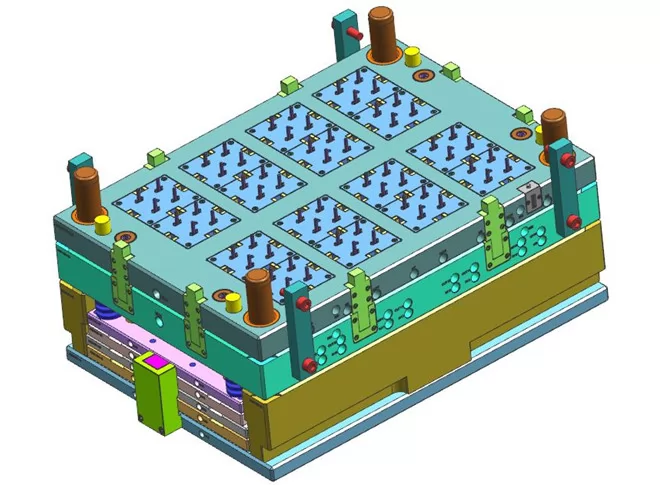
• Micro molding tooling: wire-EDM, micro-EDM, micro-milling, and precision polishing are standard. Tool steel selection and thermal control of cavities are essential for consistent micro part dimensions.
• Mold temperature control: tight and uniform temperature control reduces shrinkage variance and improves dimensional repeatability in medical micro molding.
• Shot control and feed: micro shot sizes demand extremely accurate feed systems and back-pressure control to ensure consistent melt conditions.
• Scientific molding: detailed process maps, cavity pressure monitoring, and controlled injection speed/hold profiles are used to lock-in repeatable micro molding cycles.
• In-line metrology: optical inspection systems, automated vision, and periodic CT/X-ray checks are used depending on feature criticality in medical micro molded parts.
• Validation: IQ/OQ/PQ protocols are standard for medical micro molding to demonstrate process capability and repeatability per FDA and ISO 13485 requirements.
• ISO 13485 certification for medical device contract manufacturing and micro molding quality management.
• Process validation: documented IQ/OQ/PQ and process capability studies specific to the micro injection molding process.
• Traceability: lot and material traceability, material certificates, and incoming inspection records for all micro molded medical components.
• Biocompatibility & extractables testing: test parts molded using production tooling and processes per ISO 10993 for medical micro molded devices.
• Cleanroom/white-room production: necessary for many IVD and implantable micro molded products; consider certified clean zones for assembly and packaging.
• First article and run records: first article inspection (FAI) for medical micro molding typically includes dimensional reports, CT/X-ray or micrographs, and functional test evidence.
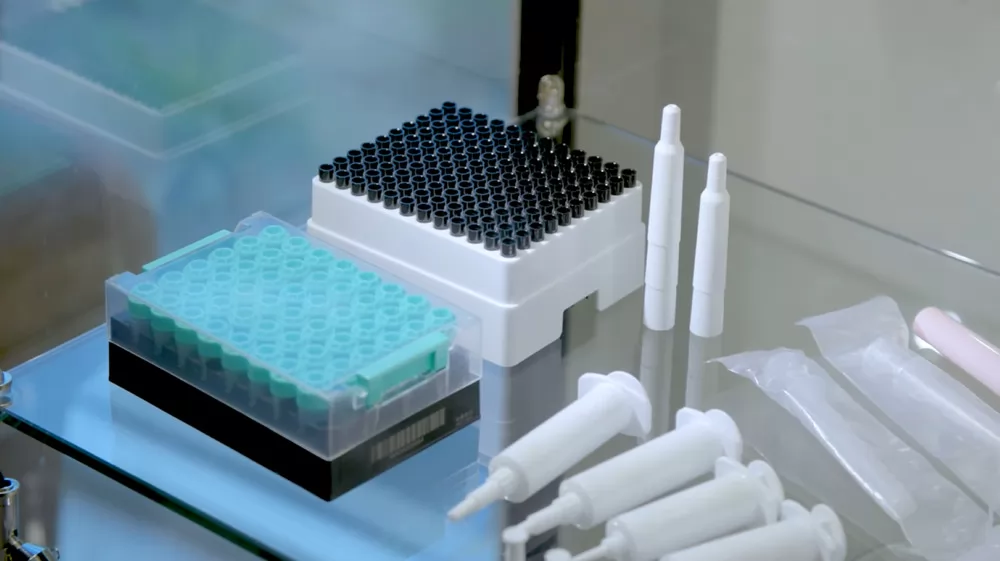
• IVD cartridges and microfluidic chips: micro injection molded channels, valve seats, and reagent wells with precise volumes and surface finishes for point-of-care diagnostics.
• Implantable device features: miniature micro molded polymer features for controlled drug delivery, anchors, or articulating micro-components.
• Hearing aids and wearables: micro injection molded housings, acoustic paths, and tiny connectors requiring sub-millimeter precision.
• Micro optics and lenses: micro-molded optical elements requiring excellent surface finish and form control for endoscopy and surgical imaging applications.
1. Demonstrated medical micro molding experience with medical device parts — ask for sample parts and case studies specific to micro injection molding.
2. Quality certifications — ISO 13485 certification and documented medical micro molding production systems.
3. In-house tooling & metrology — EDM, micro-mills, CT/X-ray, and high-precision coordinate measuring systems (CMM or optical metrology) for micro molded part inspection.
4. Cleanroom capability for assembly and packaging of micro molded medical components.
5. Process validation & documentation — IQ/OQ/PQ, lot traceability, and documented CAPA procedures aligned with FDA 21 CFR Part 820.
6. Willingness to run material validation at micro shot sizes and to perform ISO 10993 biocompatibility/extractables testing on micro molded parts.
7. Rapid prototyping and short-run tooling options for iterative medical micro molding development.
1. Engage a medical micro molder early — involve their tooling and process engineers during concept design to optimize for micro injection molding.
2. Prototype and iterate quickly — expect several mold trials to dial in tolerances and material behavior specific to your micro molded part.
3. Validate on production process — run biocompatibility and extractables testing on production-molded micro parts, not prototypes.
4. Request documentation — IQ/OQ/PQ plans, metrology reports, and capability studies before production release of micro injection molded components.
5. Use a downloadable checklist (DFM + tolerances + validation steps) to guide internal reviews of your micro molding project.