Are you looking for an ISO 13485 injection molding partner that can help you manufacture consistent, traceable plastic components for medical devices, diagnostics, or life science applications? Choosing a molding supplier involves more than comparing unit prices and machine capabilities. Your partner’s quality management system, process controls, documentation, and ability to support product requirements can all affect manufacturing risk.
ISO 13485 is an internationally recognized quality management system standard for organizations involved in medical devices and related services. For injection molding projects, it provides a structured framework for managing quality, controlling documented processes, addressing risks, and maintaining records. The standard does not prescribe one universal molding recipe; instead, it requires an appropriate quality system that fits the organization’s role and applicable requirements.
This guide explains what ISO 13485 means for plastic injection molding, which quality controls buyers should evaluate, when cleanroom production may be necessary, and how to select a qualified manufacturing partner. Trademark Plastics, Inc. (TPI) supports medical, diagnostic, and life science projects with injection molding, engineering, validation, and controlled manufacturing capabilities.
ISO 13485 injection molding refers to plastic injection molding performed within a quality management system designed to meet the applicable requirements of ISO 13485. The standard is not a separate molding technology or a specific type of plastic. It sets quality-system expectations for organizations that manufacture medical devices or provide services that support medical device production.
In practice, a medical injection molding project may involve reviewing customer requirements, controlling material inputs, documenting production parameters, inspecting molded parts, managing nonconforming product, and retaining appropriate records. The exact controls depend on the supplier’s responsibilities, the component’s intended use, customer agreements, and applicable regulations.
ISO 13485 certification should be assessed within its stated scope. Buyers should confirm that the certificate is current, issued by an appropriate certification body, and applicable to the activities and site involved in their project. Certification of a supplier’s quality management system does not automatically mean that every component is approved by a regulator or suitable for every medical application.
Medical components often require consistent dimensions, controlled materials, documented manufacturing conditions, and reliable handling of quality issues. An ISO 13485-based quality system helps a supplier manage these responsibilities systematically rather than relying only on final inspection.
A molded part can be affected by resin condition, machine settings, mold temperature, cooling, tooling wear, and operator practices. Documented procedures, defined acceptance criteria, in-process checks, and controlled changes help reduce avoidable variation between production runs.
The consequences of a component failure depend on its role in the finished device. A housing, fluid-contact component, diagnostic cartridge, or surgical instrument may have different critical characteristics and risks. A quality-focused supplier should understand the customer’s requirements and help identify manufacturing risks that could affect part conformity or intended performance.
Traceability can help link finished components to relevant material lots, production records, inspection results, and approved process revisions. If a quality issue occurs, well-maintained records can support investigation and appropriate containment. Buyers should agree with the supplier on the traceability level, record-retention period, and documentation package required for the project.
A robust quality system defines how suspected or confirmed nonconforming parts are identified, segregated, reviewed, and dispositioned. Corrective and preventive action processes can then help investigate root causes, implement corrections, and determine whether the actions were effective.
ISO 13485 applies to the quality management system, not just the molding machine or inspection department. When evaluating a medical injection molding supplier, consider how its documented system is translated into everyday production controls.
Work instructions, inspection methods, drawings, process specifications, and quality records should be controlled so teams use the approved revision. Changes to resin, tooling, equipment, process parameters, inspection methods, or manufacturing location may need review and approval based on their potential impact and the agreed change-control process.
Material controls may include supplier approval, incoming verification, resin identification, storage conditions, drying requirements, and lot identification. For moisture-sensitive resins, for example, material handling and drying can influence molding behavior and finished-part properties. The specific records required should be defined according to the resin, component, and customer requirements.
Inspection planning should focus on the dimensions and characteristics that matter to the component’s function and specification. Depending on the part, controls may include first-article inspection, visual inspection, dimensional measurement, in-process checks, sampling plans, or statistical process monitoring. Critical characteristics and acceptance criteria should be agreed before production begins.
Mold condition, machine capability, auxiliary equipment, and maintenance practices can all affect product consistency. Ask how tooling is identified and maintained, how equipment problems are recorded, and how the supplier assesses the effect of maintenance or tooling changes on the validated or approved process.
Ask how the supplier records defects, investigates root causes, communicates significant quality events, and verifies corrective actions. A clear escalation process is particularly important when a component issue could affect downstream assembly, product release, or devices already distributed.
For processes where the resulting output cannot be fully verified by subsequent monitoring or measurement, process validation may be required. In medical injection molding, validation planning should be based on the process, product risks, applicable requirements, and customer expectations. IQ/OQ/PQ is a commonly used framework for documenting equipment installation, process operating conditions, and performance under routine production conditions.
| Stage | Purpose | Typical Evidence |
| IQ — Installation Qualification | Confirm equipment and supporting systems are installed as intended. | Equipment identification, installation checks, and required documentation. |
| OQ — Operational Qualification | Establish that the process can operate within defined parameters. | Approved parameter ranges, challenge conditions, and test results. |
| PQ — Performance Qualification | Demonstrate that the process can consistently produce conforming parts under intended production conditions. | Production-representative runs, inspection results, and documented acceptance against criteria. |
Validation is not simply a one-time paperwork exercise. Changes to a mold, material, machine, process window, or production environment may require a documented assessment to determine whether requalification or other verification is needed. The supplier and customer should agree on responsibilities, acceptance criteria, and required deliverables before validation begins.
ISO 13485 does not mean that every medical plastic component must use the same resin or be molded in a cleanroom. Material and environmental requirements depend on the device’s intended use, contact conditions, contamination risks, customer specifications, and applicable regulatory requirements.
Material selection should account for more than whether a resin is marketed for medical use. Consider mechanical strength, dimensional stability, chemical exposure, operating temperature, transparency, flexibility, sterilization method, and any applicable biocompatibility requirements. Commonly considered thermoplastics include polycarbonate (PC), polypropylene (PP), polyethylene (PE), polyether ether ketone (PEEK), and thermoplastic elastomers (TPE), but suitability must be confirmed for the specific grade and application.
A material supplier’s data sheet is a useful starting point, not a substitute for application-specific evaluation. Sterilization can affect material properties, appearance, dimensions, or performance. If the component contacts tissue, blood, or fluids, the device manufacturer should determine what biological evaluation and supporting evidence are required for the intended use.
Cleanroom production may be appropriate when the product’s contamination-control requirements or customer specifications call for a controlled environment. The required classification and monitoring approach should be determined from the product and process needs rather than assumed from the word “medical.” ISO Class 7 and ISO Class 8 environments are used in some medical manufacturing applications, but not every medical component requires either classification.
When cleanroom manufacturing is specified, confirm the relevant room classification, environmental controls, personnel practices, material transfer procedures, cleaning methods, and monitoring records. Also clarify whether molding, secondary operations, assembly, and packaging all need to take place in the controlled area.
TPI states that it operates ISO Class 8 cleanroom areas and is ISO 13485 certified. Buyers should confirm the current certificate scope and the suitability of the specific production area for their project.
The right supplier should be able to connect its quality system with the practical requirements of your part. Use the following checklist when comparing manufacturers.
Do not rely on a certificate alone. A supplier assessment should also establish whether the company’s capabilities, quality practices, communication, and documentation match the needs of your specific project.
Before placing a medical injection molding order, discuss responsibilities and deliverables with the supplier. Useful questions include:
Documenting these decisions early helps reduce ambiguity during tooling, validation, and production. It also gives both parties a shared basis for reviewing quality and delivery performance.
Both medical and non-medical injection molding rely on capable tooling, suitable materials, controlled process parameters, and inspection. The difference is that an ISO 13485 quality management system adds a formal framework for managing quality and regulatory requirements associated with medical-device-related activities.
| Stage | Purpose | Typical Evidence |
| Quality system | Depends on the supplier and customer requirements. | A documented system aligned with applicable ISO 13485 requirements. |
| Traceability | Defined by customer, product, and operational needs. | Managed records and traceability appropriate to the product and requirements. |
| Process validation | Applied according to process and customer needs. | Documented validation where required, with defined acceptance criteria and records. |
| Quality issues | Handled through the supplier’s established procedures. | Managed through documented nonconformance, investigation, and corrective-action processes. |
| Cleanroom production | Used when specified by the application. | Also depends on product risk and requirements; ISO 13485 alone does not mandate a cleanroom for every part. |
This comparison is general rather than absolute. Non-medical manufacturers may also operate sophisticated quality systems, and medical suppliers must still meet the specific drawings, specifications, regulations, and quality agreements applicable to each project.
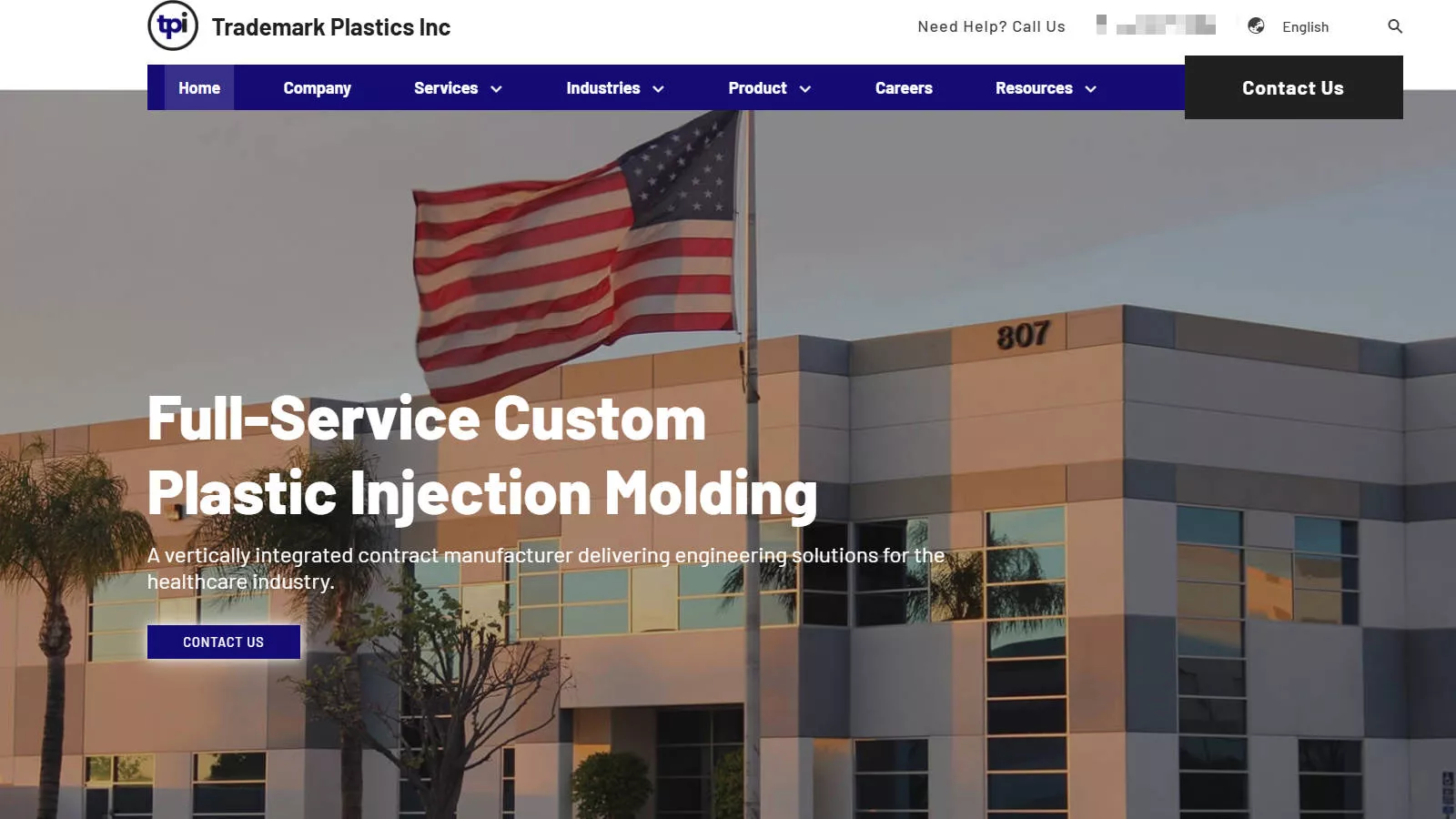
Trademark Plastics, Inc. (TPI) is a U.S.-based contract manufacturer serving medical device, life science, and diagnostic applications. The company states that it is ISO 13485 certified and operates ISO Class 8 cleanroom areas. For a specific project, buyers should confirm that the relevant activities and production location fall within the current certification scope.
TPI’s capabilities extend beyond molding to engineering and tooling support. Its services include custom plastic injection molding, design for manufacturability (DFM), Moldflow analysis, material optimization, and scientific molding expertise. These services can help teams assess part design and manufacturing considerations before production is scaled.
TPI also describes a workflow that can include prototype development, mold design and tooling, IQ/OQ/PQ validation, full-scale production, assembly, packaging, and other value-added services. The company reports operating 51 injection molding machines ranging from 6 to 610 tons. Actual process suitability depends on part dimensions, resin, tooling, tolerance requirements, and project scope.
For medical OEMs, working with a supplier that can support engineering, tooling, validation, and production may help preserve process knowledge as a project moves from development to repeat manufacturing. Discuss your component specifications, quality documentation needs, and regulatory responsibilities directly with the supplier to determine the appropriate project plan.
Looking for an ISO 13485 injection molding partner?
Discuss your medical component, validation, and production requirements with TPI.
Contact Our Team
Q1: What does ISO 13485 mean for injection molding?
It means the supplier’s quality management system is designed to meet applicable ISO 13485 requirements for its medical-device-related activities. In injection molding, this may involve documented procedures, process controls, traceability, inspection records, nonconformance management, and risk-based controls appropriate to the project.
Q2: Does ISO 13485 certification mean a molded part is FDA approved?
No. ISO 13485 certification relates to a quality management system and does not by itself constitute FDA approval or clearance of a product. The device manufacturer remains responsible for determining and meeting the regulatory requirements that apply to the finished device and its intended use.
Q3: Do all ISO 13485 injection molding projects require a cleanroom?
No. Cleanroom requirements depend on the product, contamination risks, customer specifications, and applicable requirements. If a cleanroom is needed, confirm the required classification and which manufacturing steps must occur inside it.
Q4: What is IQ/OQ/PQ in medical injection molding?
IQ, OQ, and PQ stand for Installation Qualification, Operational Qualification, and Performance Qualification. They are commonly used stages for documenting equipment installation, defining and challenging process operating conditions, and demonstrating that a process can consistently produce conforming parts under intended production conditions. The required validation approach should be based on the project and applicable requirements.
Q5: Which materials can be used for medical injection molding?
Possible materials include grades of PC, PP, PE, PEEK, and TPE, among others. The correct resin depends on mechanical, thermal, chemical, dimensional, sterilization, and application requirements. The specific grade and its suitability should be evaluated for the intended use rather than selected by polymer name alone.
Q6: What should I provide when requesting a medical molding quote?
Provide 2D drawings or 3D CAD files, the proposed material or material requirements, annual and initial quantities, critical dimensions and tolerances, cosmetic requirements, intended application, sterilization needs if applicable, cleanroom requirements, and requested quality documentation. Sharing validation and traceability expectations early can also help the supplier prepare a more accurate proposal.
Custom Plastic Injection Molding
Explore TPI’s injection molding capabilities for custom plastic components and discuss process requirements for your application.
The Complete Guide to Custom Medical Components
Review considerations for engineering, material selection, controlled production, and validation when developing custom medical plastic components.
Medical Micro Molding Services & Capabilities
Learn about specialized micro-injection molding capabilities for high-precision medical and diagnostic components.
ISO 13485 injection molding combines plastic component manufacturing with a documented quality management system designed for medical-device-related requirements. For buyers, the most important considerations include certification scope, material controls, process validation where required, traceability, inspection planning, change management, and the supplier’s ability to support the product throughout its manufacturing lifecycle.
A certificate is an important starting point, but it should be considered alongside technical capability, relevant experience, quality records, and project-specific requirements. Cleanroom production, material selection, and validation activities should be defined according to the device’s intended use and applicable specifications—not assumed to be identical for every medical component.
Trademark Plastics, Inc. provides custom injection molding and related engineering, tooling, validation, and production support for medical, diagnostic, and life science applications. Contact TPI to discuss your part design, quality documentation, and manufacturing requirements.
Planning a medical plastic injection molding project?
Talk with TPI about quality requirements, validation, and production support.
Request a Quote